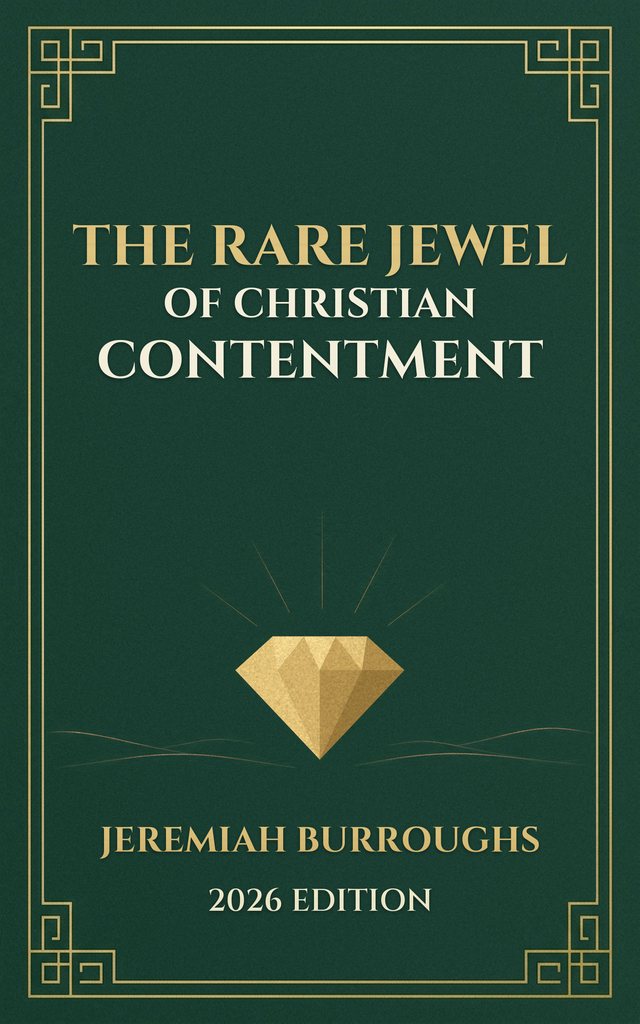
The Rare Jewel of Christian Contentment
A Reformed Classic on Learning to Be Content
Coming soon to AmazonRead the original free
“I have learned, in whatsoever state I am, therewith to be content.”
Philippians 4:11
In 1645, with England torn by civil war, Jeremiah Burroughs preached eleven sermons in London on that single verse. Published by his friends after his death, The Rare Jewel of Christian Contentment has become one of the best-loved books the Puritans left us: a searching, tender guide to finding rest in God whatever comes.
More about this book
Burroughs shows that Christian contentment is neither a natural calm nor a stubborn resolve, but a grace and a mystery that Christ teaches in His school. A Christian comes to it less by adding to what he has than by bringing his desires to rest in God, who is enough.
In this book you will find:
- What Christian contentment is, and what it is not
- The mystery of how a believer is content in God in every condition
- The lessons Christ teaches: self-denial, the emptiness of created things, the one thing needful, and God’s providence
- Why contentment is so excellent, and why murmuring is so evil
- Thirteen pleas of a discontented heart, answered one by one
- Ten considerations and twelve directions for learning to be content
Complete, in clear modern English
This edition keeps all eleven of Burroughs’ sermons, with the commendation by seven of his fellow ministers, and every argument, illustration, and Scripture reference. His long seventeenth-century sentences have been divided and old words replaced, so his warm, plain preaching speaks to today’s readers. Scripture is quoted from the Berean Standard Bible, with Philippians 4:11 in the King James wording he expounds.
Part of Modern Reformed Classics, beloved Puritan and Reformed books in modern English. Also in the series: Thoughts for Young Men and Holiness by J. C. Ryle and The Mortification of Sin by John Owen.
The original text, free
Read The Rare Jewel of Christian Contentment as Jeremiah Burroughs wrote it, first published in 1648.
Here are your files: